NASA Range Supports Space Station
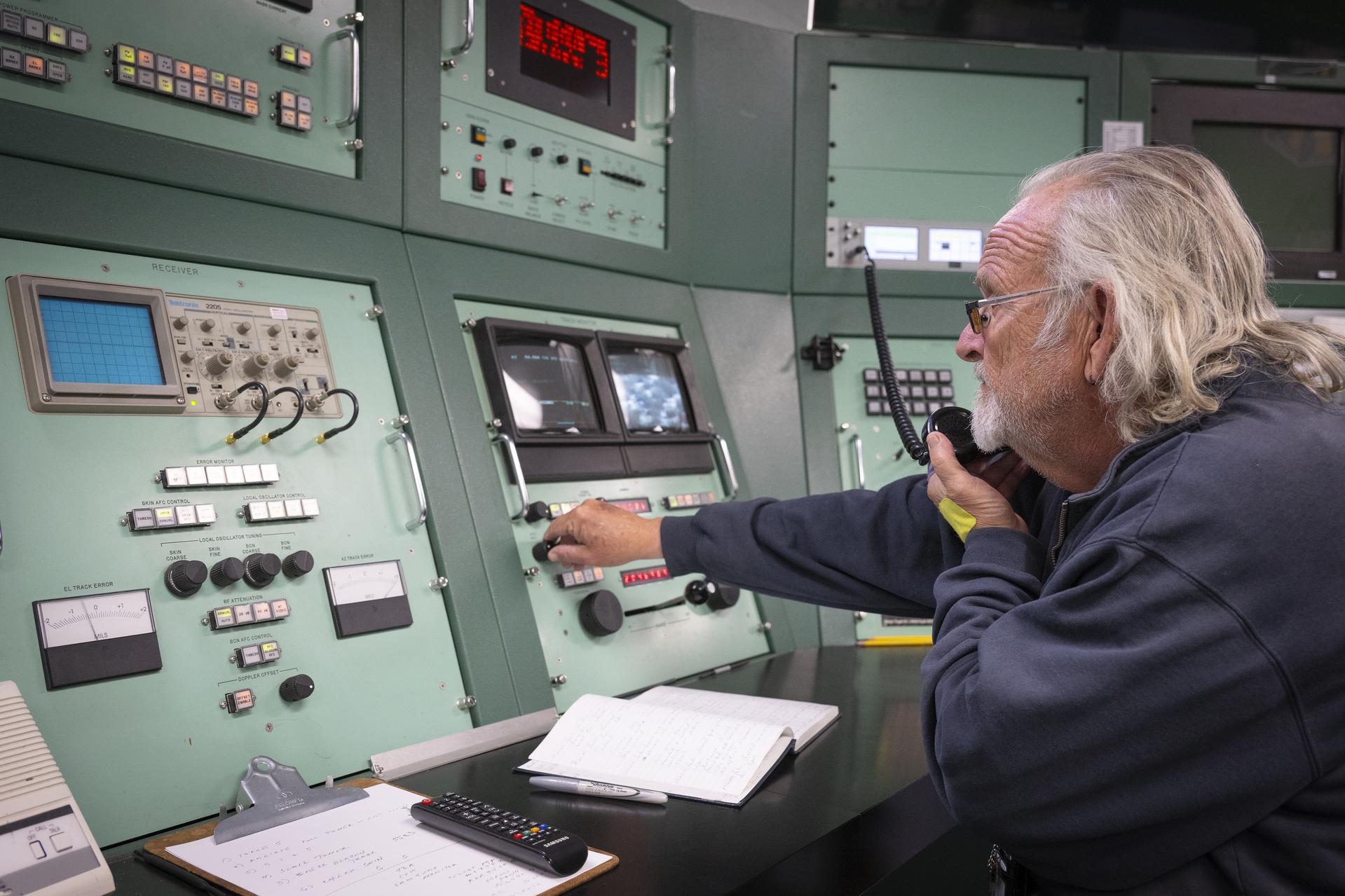
Mission operator Mike Webb sits at one of the radar stations used to track the International Space Station as it passes high above NASA’s Armstrong Flight Research Center in Edwards, California, on Sept. 30, 2025. Webb is part of the center’s Dryden Aeronautical Test Range, which provides voice and tracking support to the space station.
Story Summary
Mission operator Mike Webb sits at one of the radar stations used to track the International Space Station as it passes high above NASA’s Armstrong Flight Research Center in Edwards, California, on Sept. 30, 2025. Webb is part of the center’s Dryden Aeronautical Test Range, which provides voice and tracking support to the space station.
Source
Original media from NASA Image and Video Library.
Site Commentary
In simple terms, Mission operator Mike Webb sits at one of the radar stations used to track the International Space Station as it passes high above NASA’s Armstrong Flight Research Center in Edwards, California, on Sept. 30, 2025. Webb is part of the center’s Dryden Aeronautical Test Range, which provides voice and tracking support to the space station.
People Also Ask
What is this update about?
Why does it matter?
Where can I learn more?
Sources
Primary sources include NASA Open APIs and official mission data feeds.